Good jaggery is a race against time. Cane starts losing sweetness the moment it is cut, so everything that matters happens within hours of harvest, at a small unit beside the fields.
Step by step
Crush. Freshly cut cane goes through the crusher the same day. The juice that runs off is cloudy, grassy and green-gold.
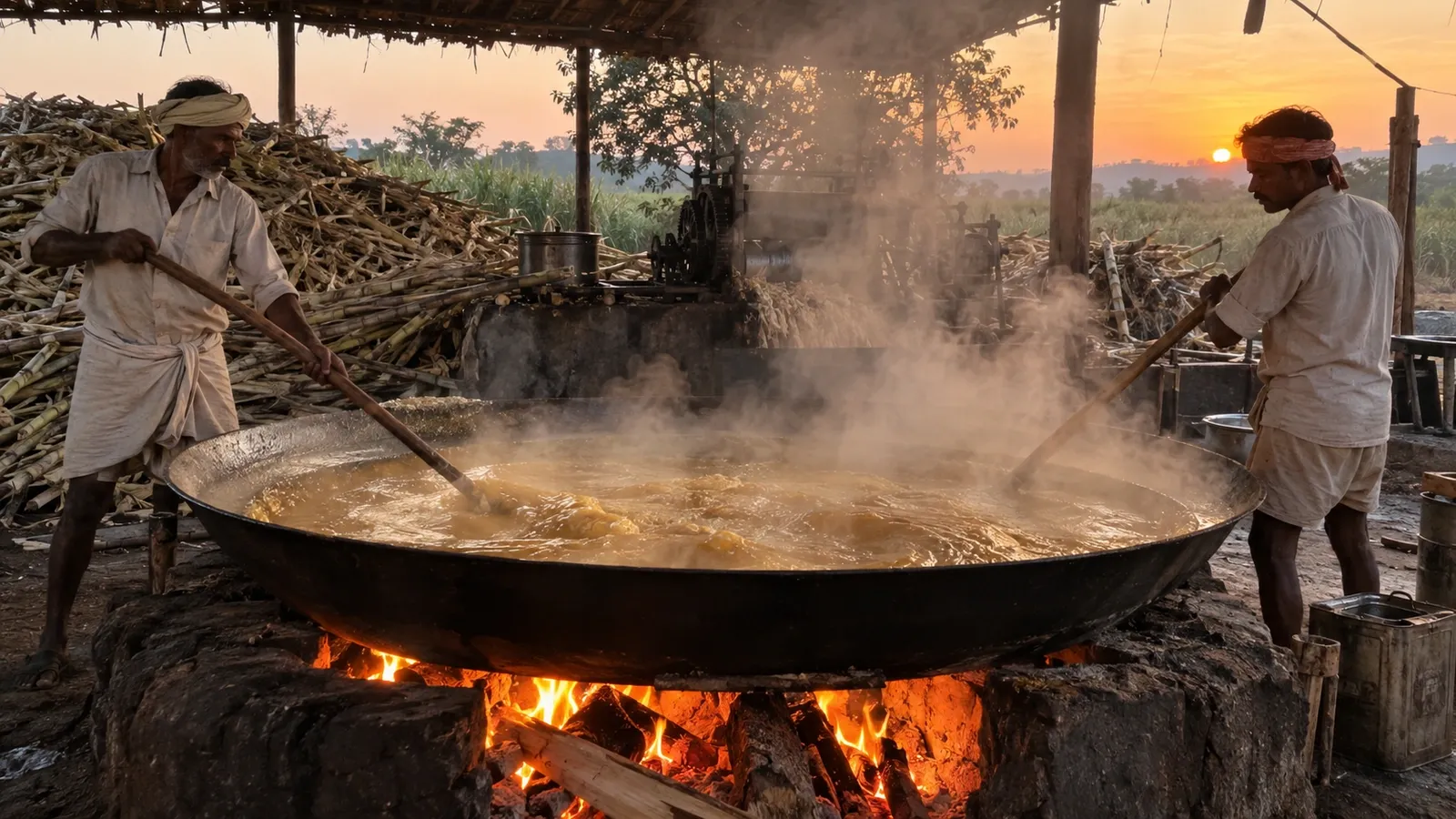
Settle and skim. The juice rests briefly so field dust sinks, then moves to the pan. As it heats, impurities rise as a thick froth, which the gur-maker skims off continuously. Traditional units clarify with plant-based agents — a mucilage drawn from wild okra stems is the classic one — not with chemicals.
Boil. This is the part that names the product. The juice boils in a wide, open iron pan over a fire fed with crushed cane stalks — the crop cooking over its own remains. For two to three hours someone stands at that pan, stirring and judging.
Strike. The gur-maker decides the endpoint by eye and hand: a drop pressed between the fingers, the way the boil folds. Pulled early, the jaggery stays soft; pulled late, it scorches. There is no thermometer that replaces this judgement.
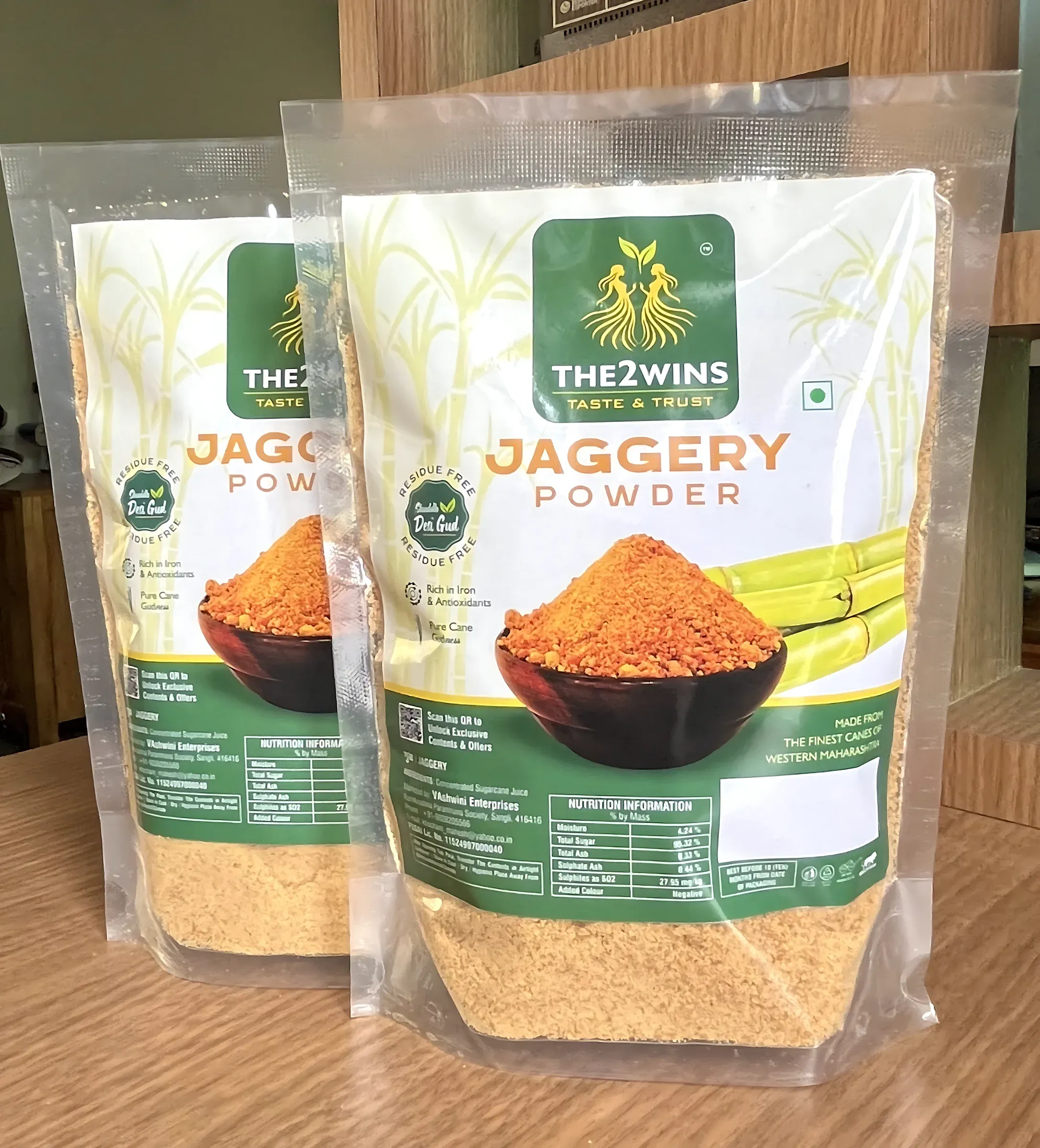
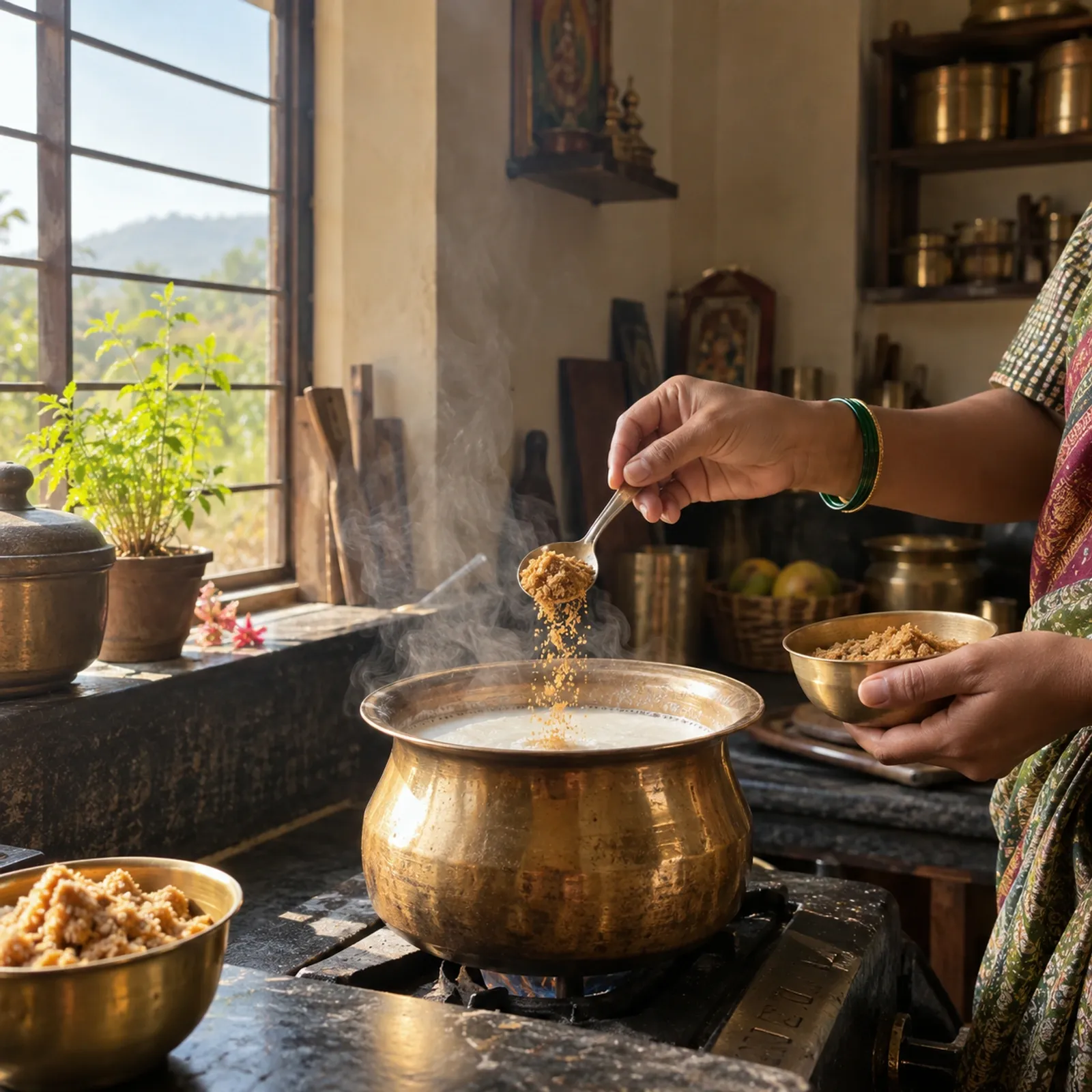
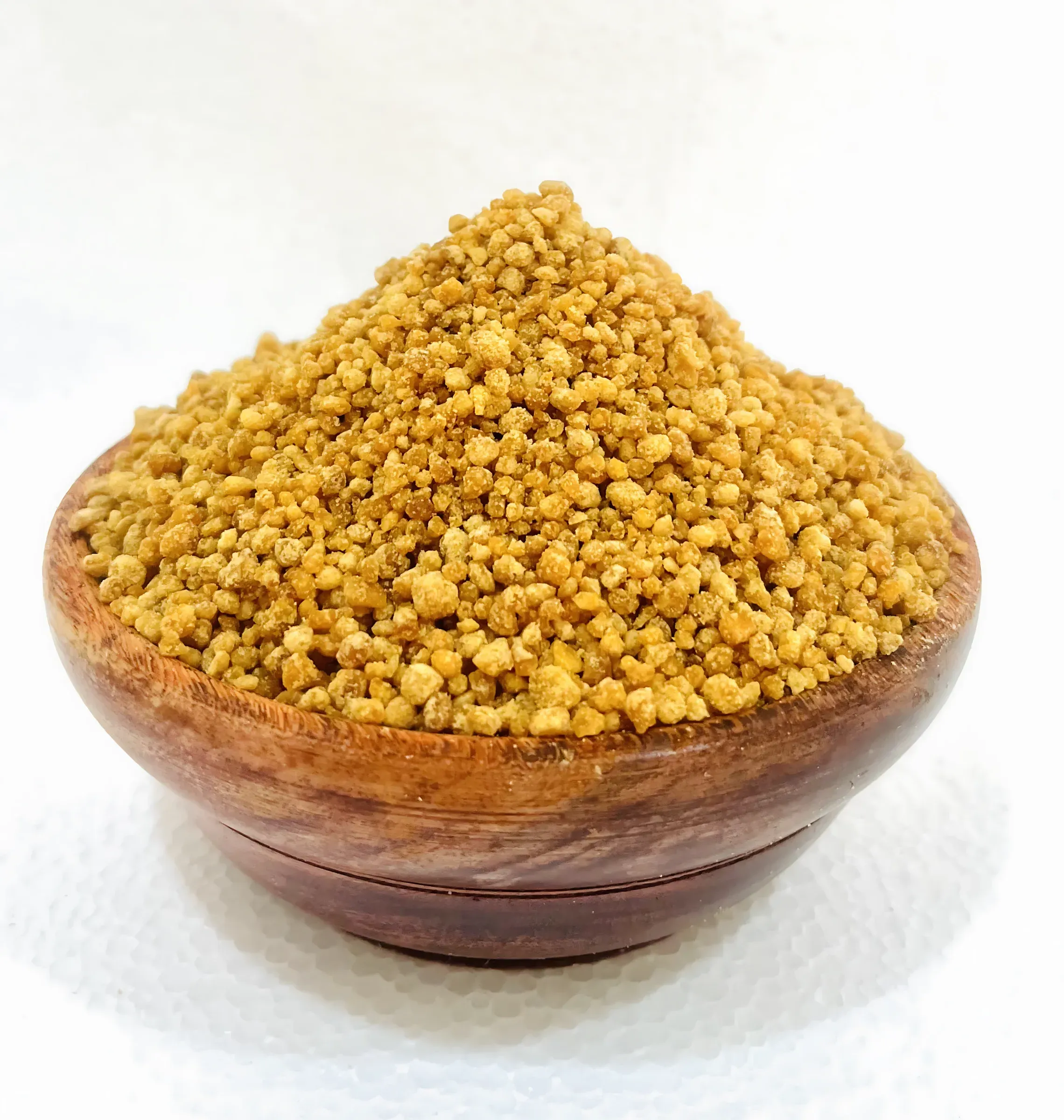
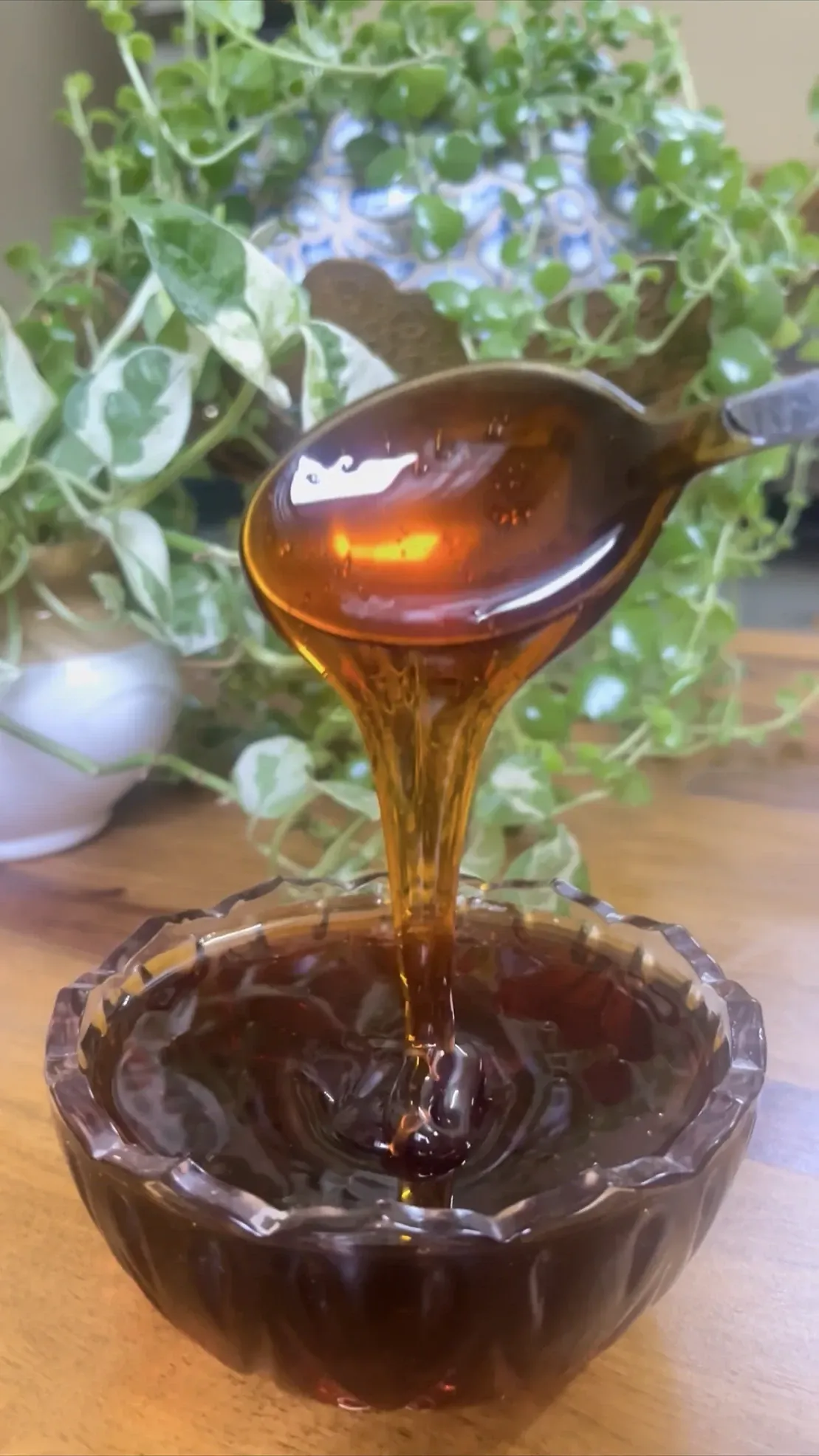
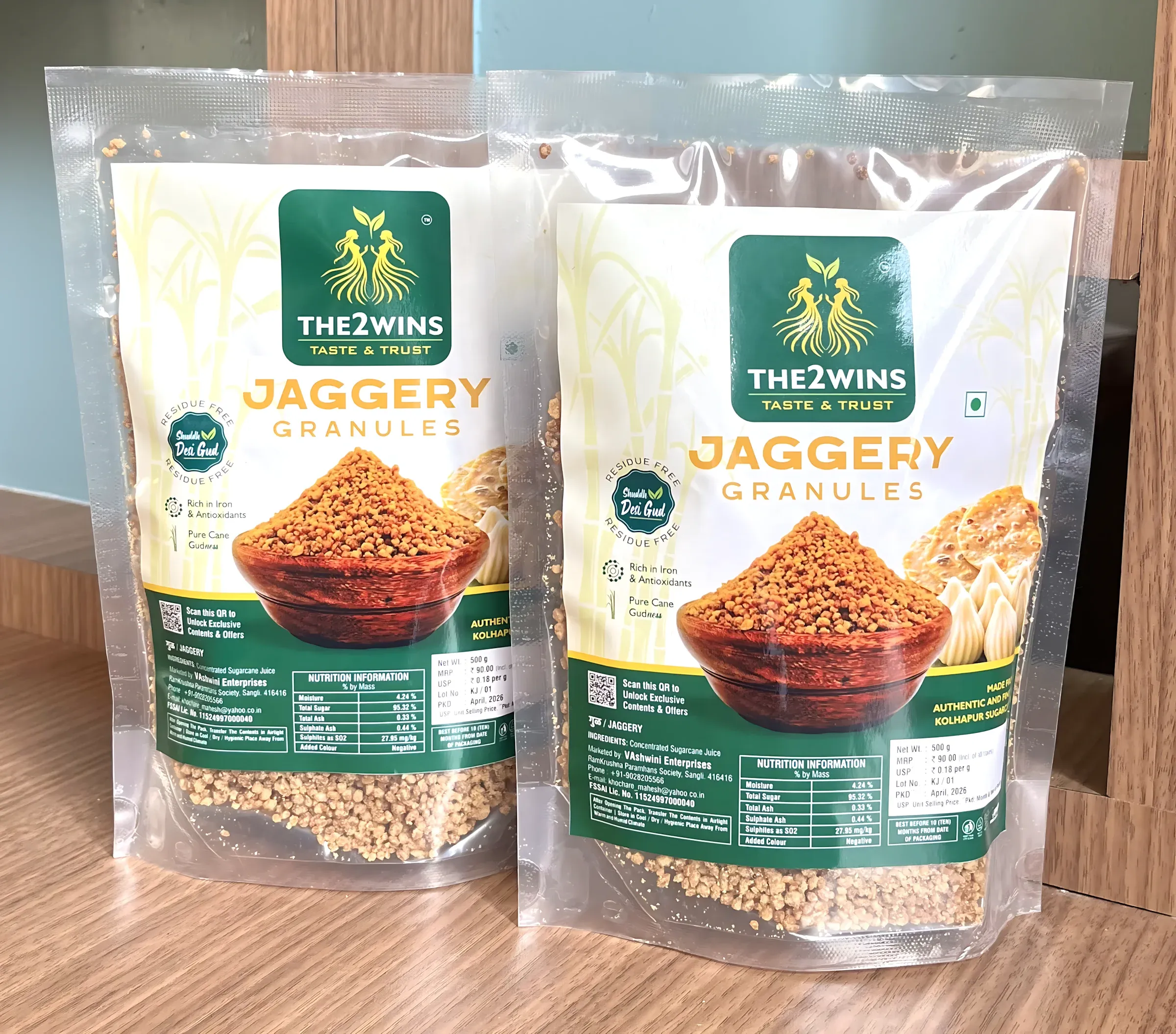
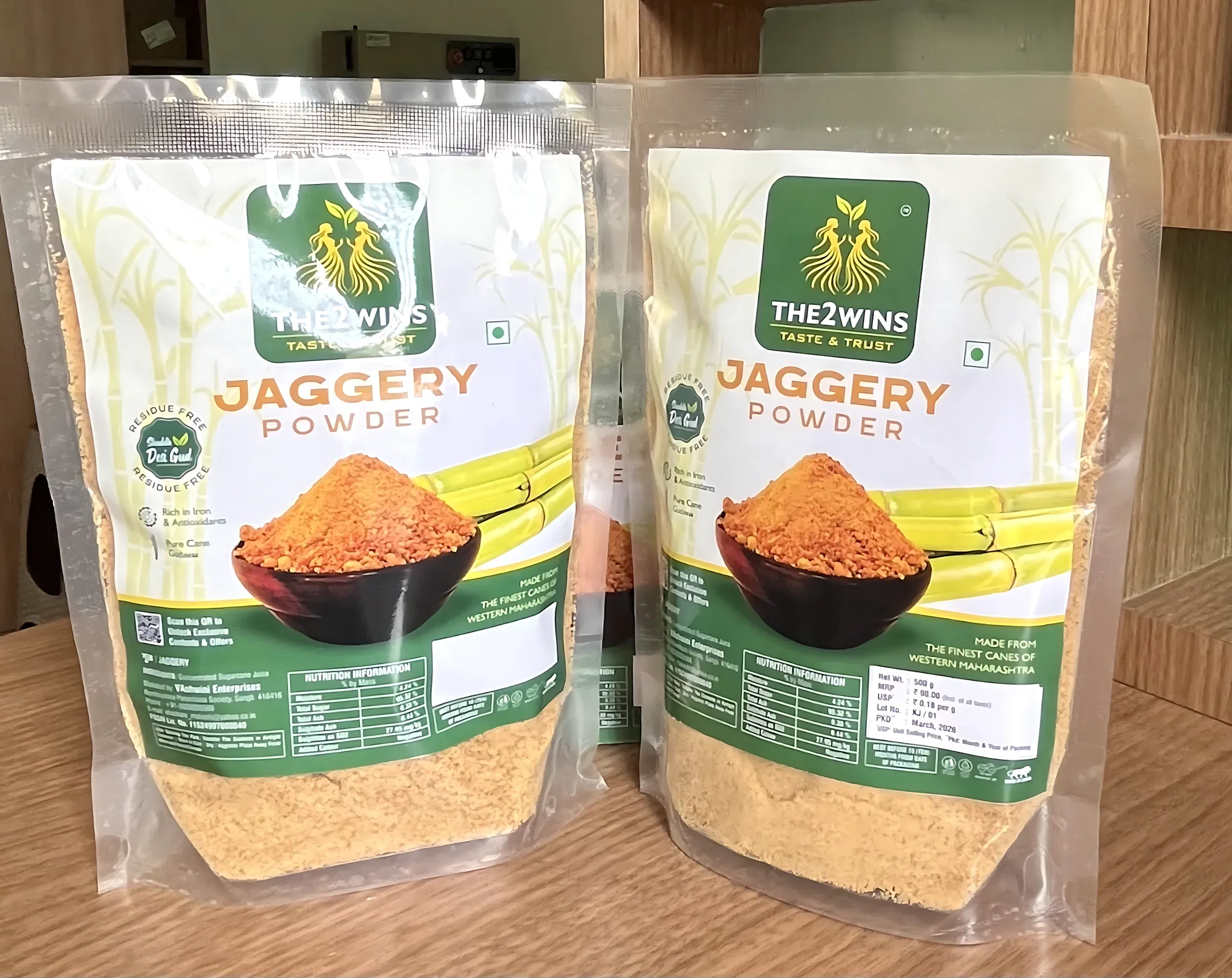
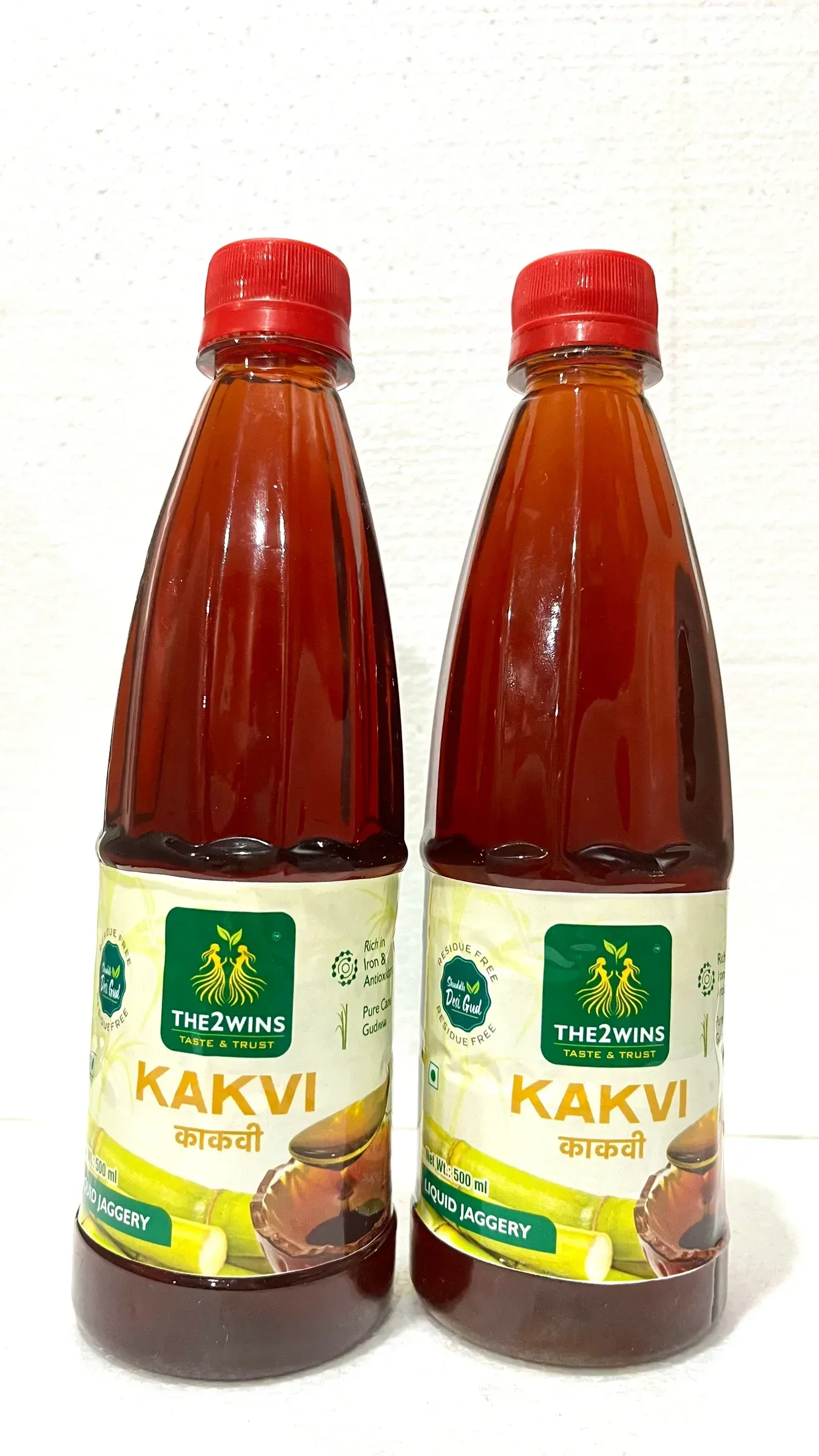
Draw off, or work it. Some of the syrup is drawn off before it sets — that is kakvi, jaggery in its pourable stage. The rest is worked as it cools into granules and, ground finer, into powder. By evening, the field from the morning is jaggery.
The shortcuts we refuse
Commercial jaggery is often treated to look “better”: washing soda to control the boil, and bleaching agents to strip the natural brown into a pale gold that buyers have been taught to prefer. The whitest jaggery in the market is usually the most processed thing on the shelf.
Ours keeps its natural colour, which also means it varies — batch to batch, season to season, one pan is a shade darker than the next. That variation is not a defect. It is what an honest boil looks like.
Why “open-pan” matters
Open-pan boiling is slower and yields less than pressure processing, but it caramelises the juice gently and keeps the minerals of the whole cane — iron, calcium, magnesium, potassium — in the finished gur. It is the difference between concentrating a food and refining one.