
खोबरेल तेल · oil
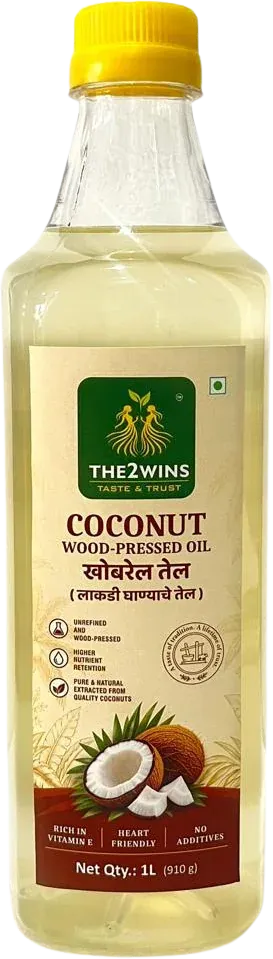
Wood-Pressed Coconut Oil
Coconut pressed in a wooden ghani — its aroma and flavour kept in.
1 L
₹652₹870discounted from ₹870 most recent retail price
लाकडी घाण्याचे तेल · wood-pressed oils
Our oils are pressed the old way, in a traditional wooden ghani (लाकडी घाणा) at 40–45 °C, then bottled unrefined. There is no refining, nothing added, and every bottle has one ingredient: the oil of the seed or nut it came from.
Choose by taste: groundnut for a nutty everyday oil, sunflower when you want a mild one that lets the food lead, and coconut wherever the flavour of coconut belongs.
25% off · ends 30 November
लाकडी घाण्याचे तेल · the range
Prices are per pack; delivery comes back on WhatsApp, usually within the day.
खोबरेल तेल · oil
Coconut pressed in a wooden ghani — its aroma and flavour kept in.
1 L
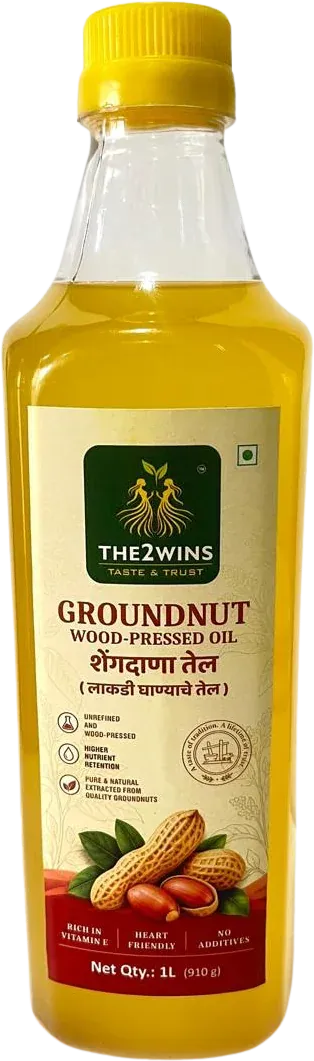
शेंगदाणा तेल · oil
Groundnuts pressed in a wooden ghani — nutty, golden, for everyday cooking.
1 L
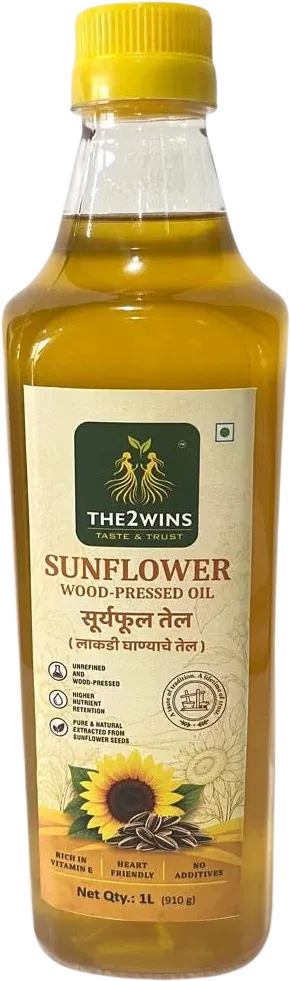
सूर्यफूल तेल · oil
Sunflower seeds pressed in a wooden ghani — a mild oil that lets the food lead.
1 L
आमची पद्धत · why ours
The wooden ghani turns slowly, so the oil comes out at 40–45 °C, the figure printed on every bottle, and keeps its natural aroma and flavour.
Refined oil is bleached and deodorised until it tastes of nothing. Ours is pressed and bottled, and the label lists a single ingredient.
A little sediment settles at the bottom of every bottle. The label calls it the true signature of traditional wood pressing, and it is.
प्रश्न · good questions
The oil is pressed out in a ghani, a large wooden mortar whose pestle turns slowly against the seeds, rather than extracted at high heat and then refined. Ours is pressed at 40–45 °C, the temperature printed on the back of the bottle.
Because the oil is not refined. Fine particles from the pressing settle at the bottom over time; the label calls them the true signature of traditional wood pressing. They do no harm. Pour gently and they stay where they are.
Groundnut is the everyday all-rounder, with a nutty flavour that suits phodni, sabzi and shallow frying. Sunflower is the mild one, for when you want the spices to lead. Coconut is for coconut curries, tempering sambar and chutney, and any recipe that wants coconut flavour.
Close the cap after use and keep the bottle in a cool, dry place away from direct sunlight and heat. Each bottle is best before six months from packing, the date printed on the label.